Blog
🏠 House Owners🧑‍🔧 Contractors🏪 Vendors🇮🇳 Made for India

Build your house without losing track of a single rupee.

Log every material, contractor payment and construction stage in one place — from footing to finishing. Vendors get their own dashboard for orders, deliveries and pending payments.

Plans from just ₹99/month · Pay by UPI

See it in action

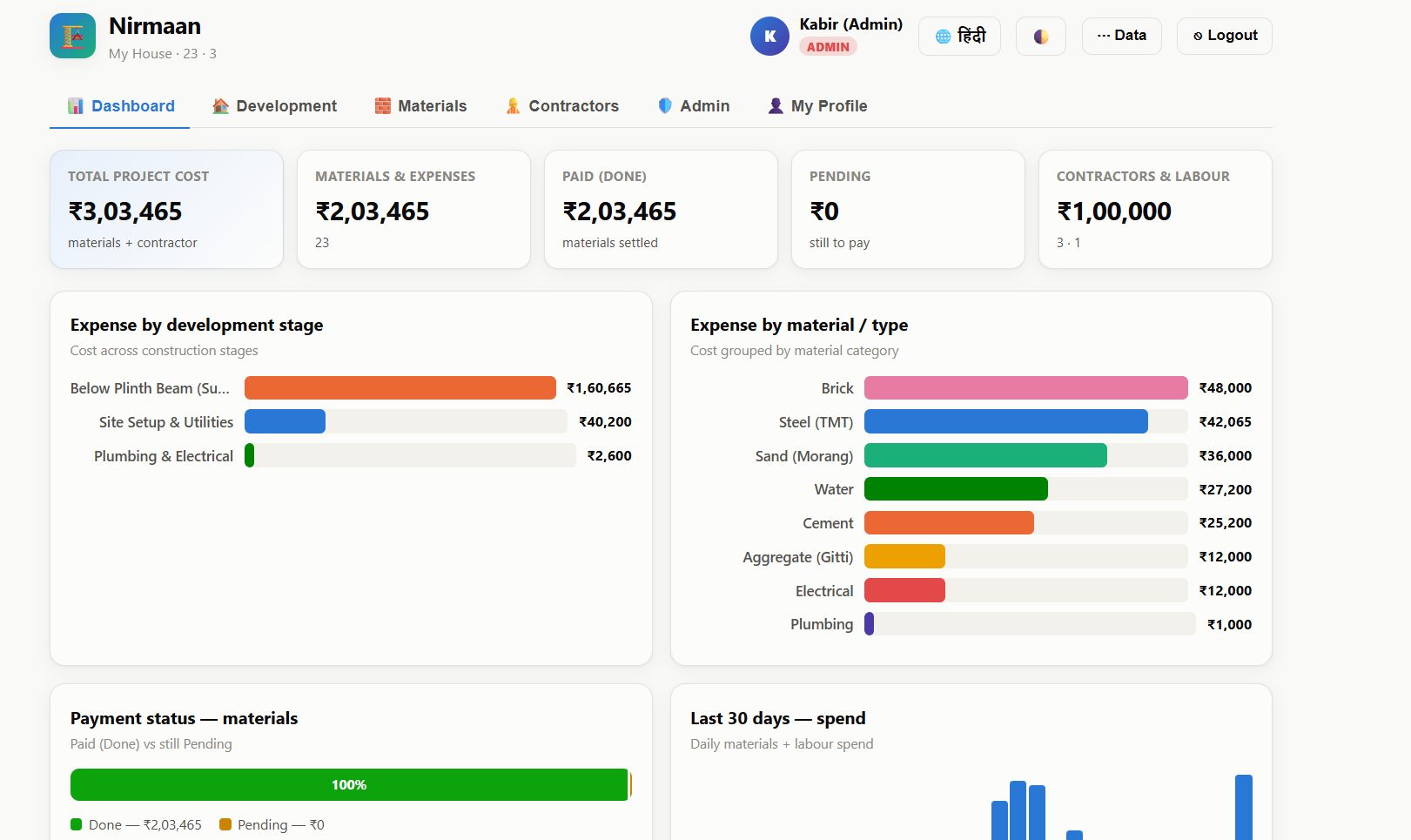
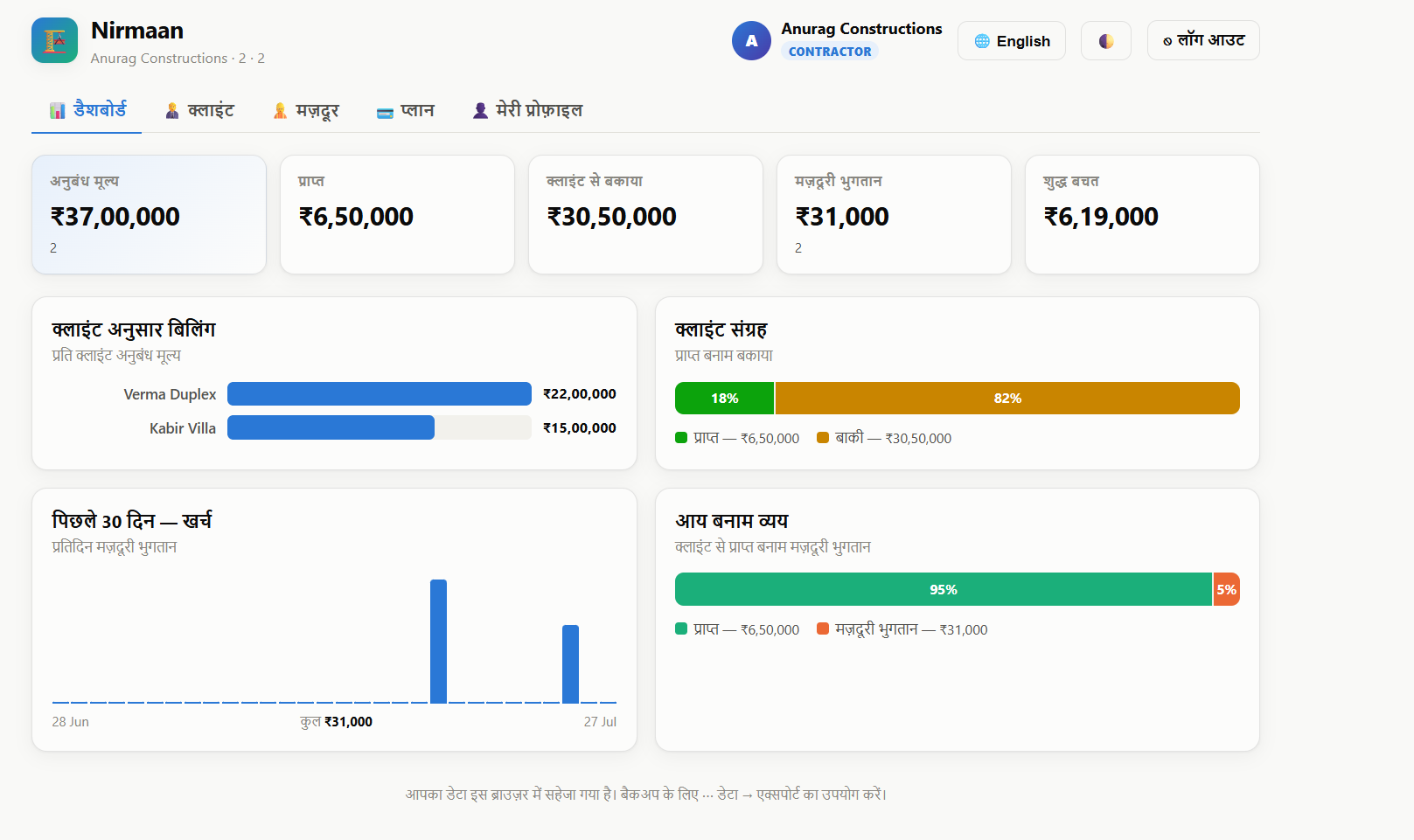
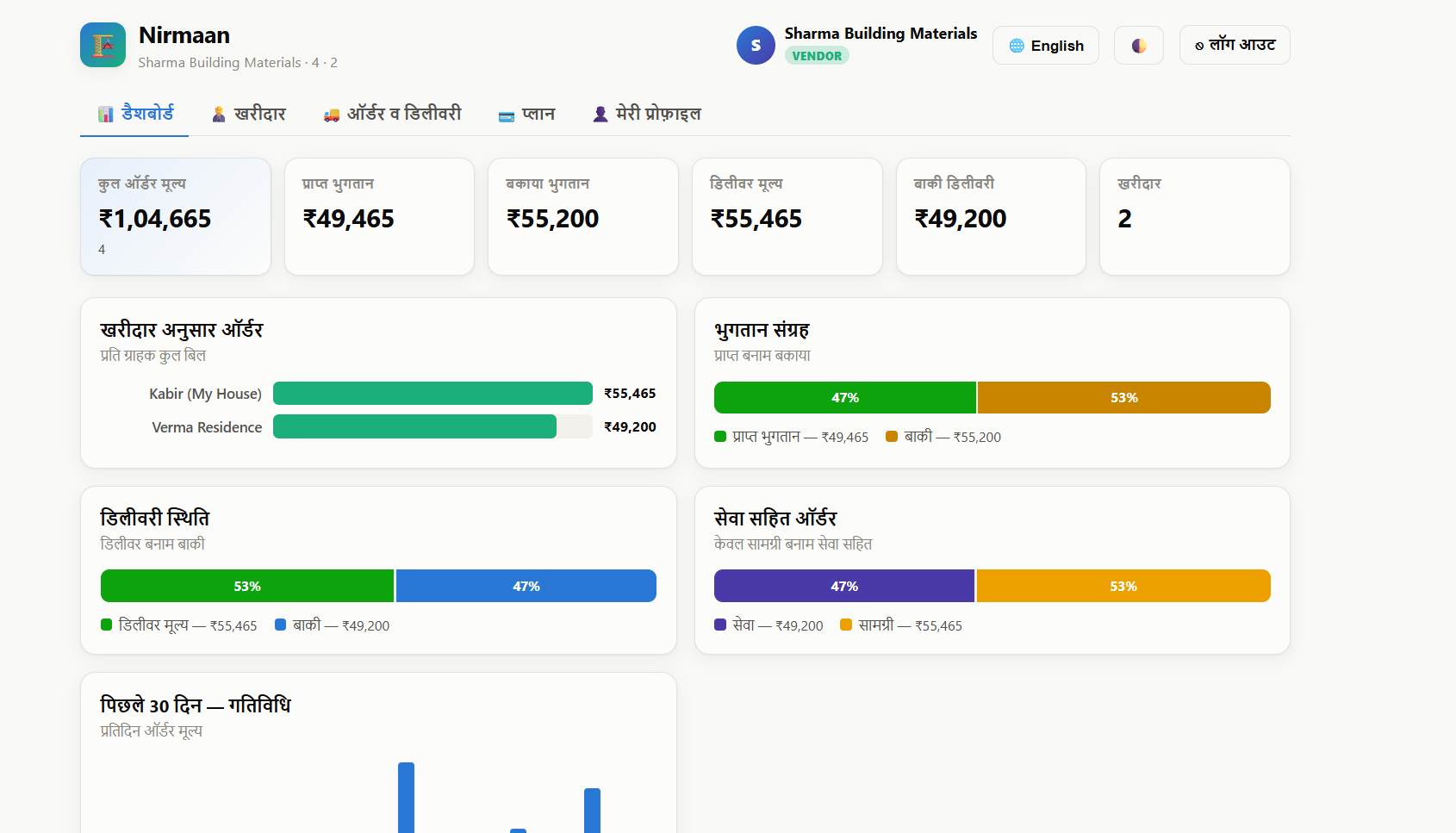
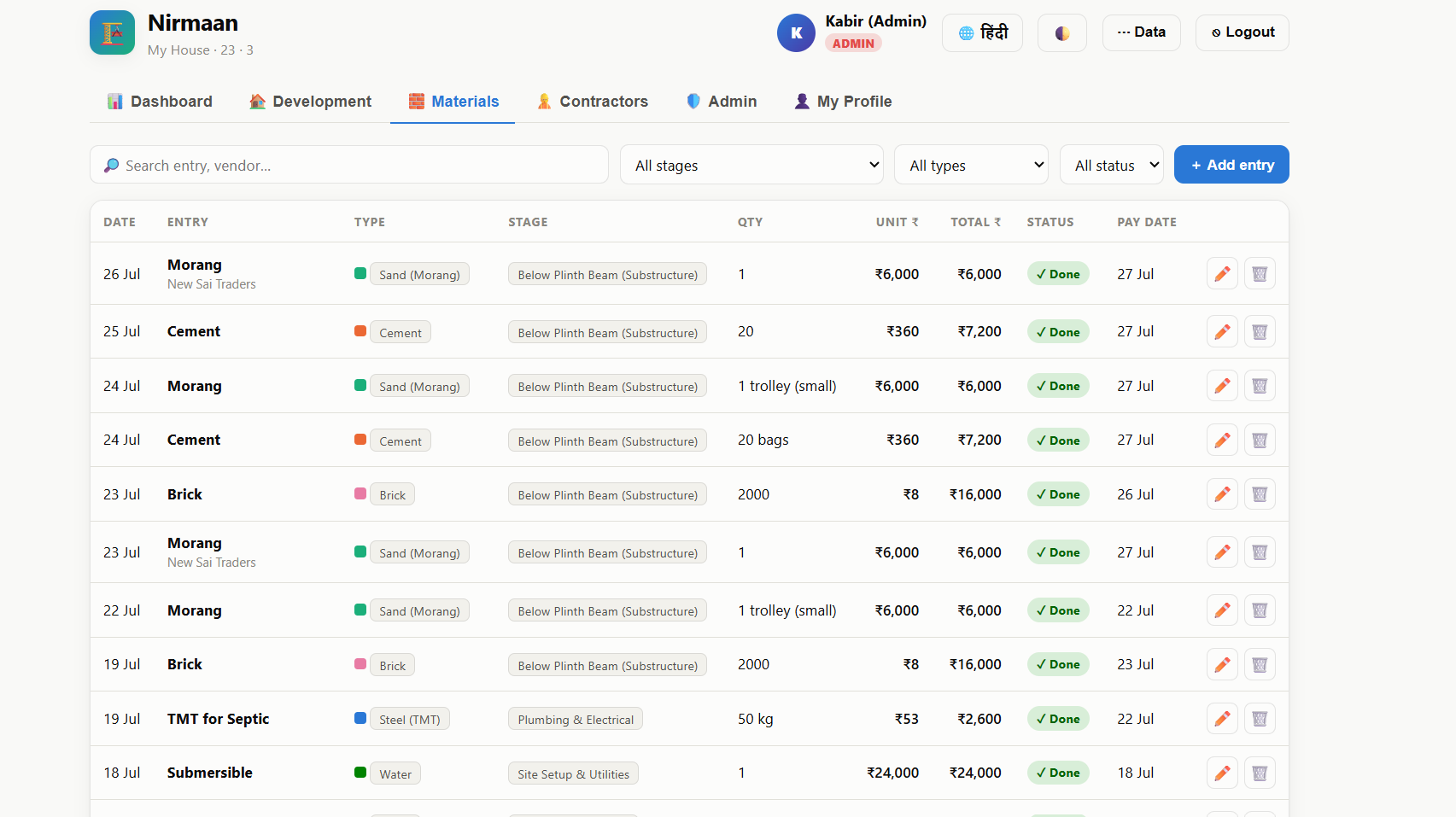
Real screens from the app — dashboards, stages, material logs and contractor payments.

Owner dashboard
📊Owner dashboard
Owner dashboard
Contractor dashboard
👷Contractor dashboard
Contractor dashboard
Vendor dashboard
🚚Vendor dashboard
Vendor dashboard
Material ledger
🧱Material ledger
Material ledger

Everything your build needs

A tracker for house owners, a clients-and-labour toolkit for contractors, and an orders dashboard for vendors — all in one.

🧱

Materials & expenses

Every entry with quantity, cost, status and payment date. Mark pending bills paid in one tap.

🏠

Stage-wise development

Track progress from below-plinth to painting, with cost auto-totalled per stage.

👷

Contractors & labour

Plumber, carpenter, painter, mason — each with a running paid total.

🧑‍🔧

Contractor: clients & labour

Track money received from each client and wages paid to each worker — with net-in-hand.

🚚

Vendor: deliveries

Materials delivered vs pending, with a service-included flag on every order.

💰

Vendor: buyer payments

See each buyer's ordered, received and outstanding amounts at a glance.

📊

Clear dashboards

Charts and 30-day spend trends that update instantly, in light or dark mode, on any device.

Simple pricing

Pay by UPI. Cancel anytime. Same low price for owners and vendors.

From the Nirmaan blog

Practical, India-first guides on planning, budgeting and tracking your home construction — so you never lose track of a single rupee.

How to Track Your House Construction Cost in India (2026 Guide)

Building a home is one of the biggest investments an Indian family ever makes — and also one of the easiest to overspend on. In practice, most self-built homes finish 15–30% over budget, usually because no one is tracking day-to-day spending against a plan. This guide shows a simple, proven way to keep your construction cost under control from footing to finishing.

1. Break the project into stages

A house isn't one bill — it's dozens of small ones across stages: site setup, below-plinth work, columns and roof slab (RCC), brickwork, plumbing and electrical, plastering, waterproofing, flooring and tiling, doors and windows, painting and finishing. When you budget and track stage-wise, you instantly see which stage is eating your money and can course-correct before the next one begins.

2. Log every material and labour payment the same day

The single habit that saves the most money is recording each expense on the day it happens — the steel (TMT) load, the cement bags, the sand and aggregate, the mason's weekly wages. Note the quantity, rate, total, and whether it's paid or still pending. Memory fails; a ledger doesn't. With a tool like Nirmaan you can add an entry in ten seconds from your phone, right at the site.

3. Separate “paid” from “pending”

Cash flow, not just total cost, is what actually stalls construction. Always know two numbers: how much you've paid and how much is still pending to vendors and contractors. A clear paid-vs-pending view prevents the nasty surprise of three big bills falling due in the same week.

4. Watch your last-30-days trend

A simple daily-spend chart tells you if your burn rate is accelerating. If last month spent far more than the previous one without matching progress on site, that's your early warning to pause and review before the next order goes out.

5. Keep contractor and labour accounts clean

Track money given to each contractor and wages paid to each worker separately, with a running balance. When accounts are transparent, disputes disappear and you always know your true “money in vs money out.”

No card needed. 10 entries + 1 contractor to begin.

Cement, Steel & Sand: How to Manage Material Costs When Building a Home

Materials make up roughly 55–65% of a typical Indian home's construction cost, and their prices move constantly — steel (TMT) and cement especially can swing month to month. Managing material costs well (buying right, avoiding wastage, and tracking every delivery against payment) is where owners save lakhs. Here's how.

Know your big five

Most of your material spend goes to five items: steel (TMT bars), cement, sand (morang), aggregate (gitti) and bricks. Track each as its own category so you can see exactly where the money goes and compare rates across vendors before the next order.

Estimate quantities before you buy

  • Steel: roughly 4–5 kg per sq ft of built-up area for a standard RCC home.
  • Cement: about 0.4 bags per sq ft, depending on design and mix.
  • Bricks: around 8 bricks per cubic foot of wall.

Treat these as starting points, confirm with your engineer, and record the actual quantity used at every stage so wastage shows up quickly.

Track deliveries against payments

Order value, quantity delivered and amount received rarely line up perfectly. Log every order with its delivery status (delivered, partial, pending) and how much you've paid. This is exactly what material vendors on Nirmaan do — a clean ledger of orders, deliveries and pending collection for each buyer.

Buy at the right time, in the right lot

Cement loses strength if stored too long, so don't over-buy early. Steel is often cheaper in bulk — worth timing when rates dip. A running record of what you paid last time gives you real leverage to negotiate the next order.

Reduce wastage on site

Wastage of 3–5% is normal; beyond that, you're burning money. Tracking material issued versus work completed at each stage is the simplest way to catch leakage — over-ordering, theft or careless handling — before it adds up.

Works offline, in English & हिंदी.

Prototype note: accounts & data are stored in your browser; UPI payments are verified manually by the admin.

Nirmaan — nirmaan.site · Home construction tracker for owners & vendors